KLA Map 2026, An Ai Experiment
A long-time dream, finally taking shape.
My journey with public mapping began back in 2014 during the Koorachundu mapping exercise. Since then, one idea kept coming back to us - can we build a clean, insightful infographic combining election data with maps? Sounds simple, but the reality was anything but.
The biggest hurdle was always the same: administrative maps. The only official source-the delimitation documents published by the Election Commission-comes as dense, text-heavy PDFs. Converting those into accurate, machine-readable geospatial data was a painfully manual and error-prone process. We even attempted an early version around the 2015 elections with a few friends. But each time, the effort of translating those documents into usable maps slowed us down.
Things began to change in 2020, when we at Open Data Kerala released an open-licensed Kerala map with LSGI boundaries. It wasn’t perfect-we knew there were errors-but it was a crucial step forward. Today feels different. We’ve now generated an Assembly Constituency map that cleanly overlays with LSGI boundaries-far more accurate than anything we’ve built before. What changed? AI played a key role this time. It helped in initial matching of administrative units to their respective Assembly constituencies-something that used to take enormous manual effort and then what left was manual validations with people. With a clear idea of what we wanted, I was also able to build a working review portal in under an hour.
And this time, we’re doing something even more important: opening it up for public review before final release.
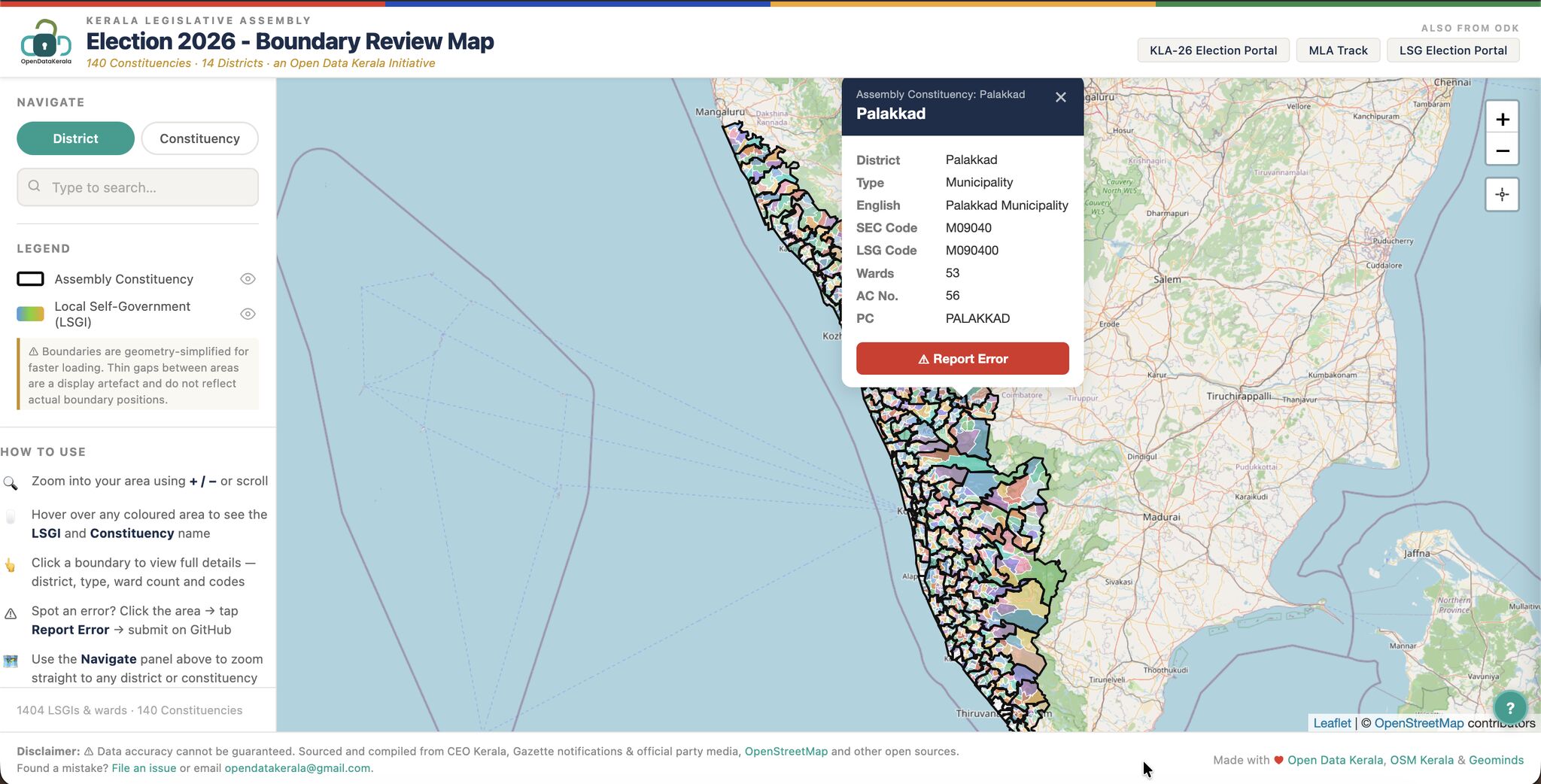
The map review portal lets anyone:
- Explore the map interactively
- Identify errors
- Report corrections via Google Forms or GitHub
Parallel to this, another team has been working on election data-building KLA 2026 Election portal that lets you explore candidates, age, gender, party-level insights, and constituency-level breakdowns. You can slice and analyse the data in multiple ways.
This builds on similar efforts, like the 2025 Kerala LSGI election results platform, and complements other initiatives like MLA Track for tracking MLA performance through Open Data Kerala.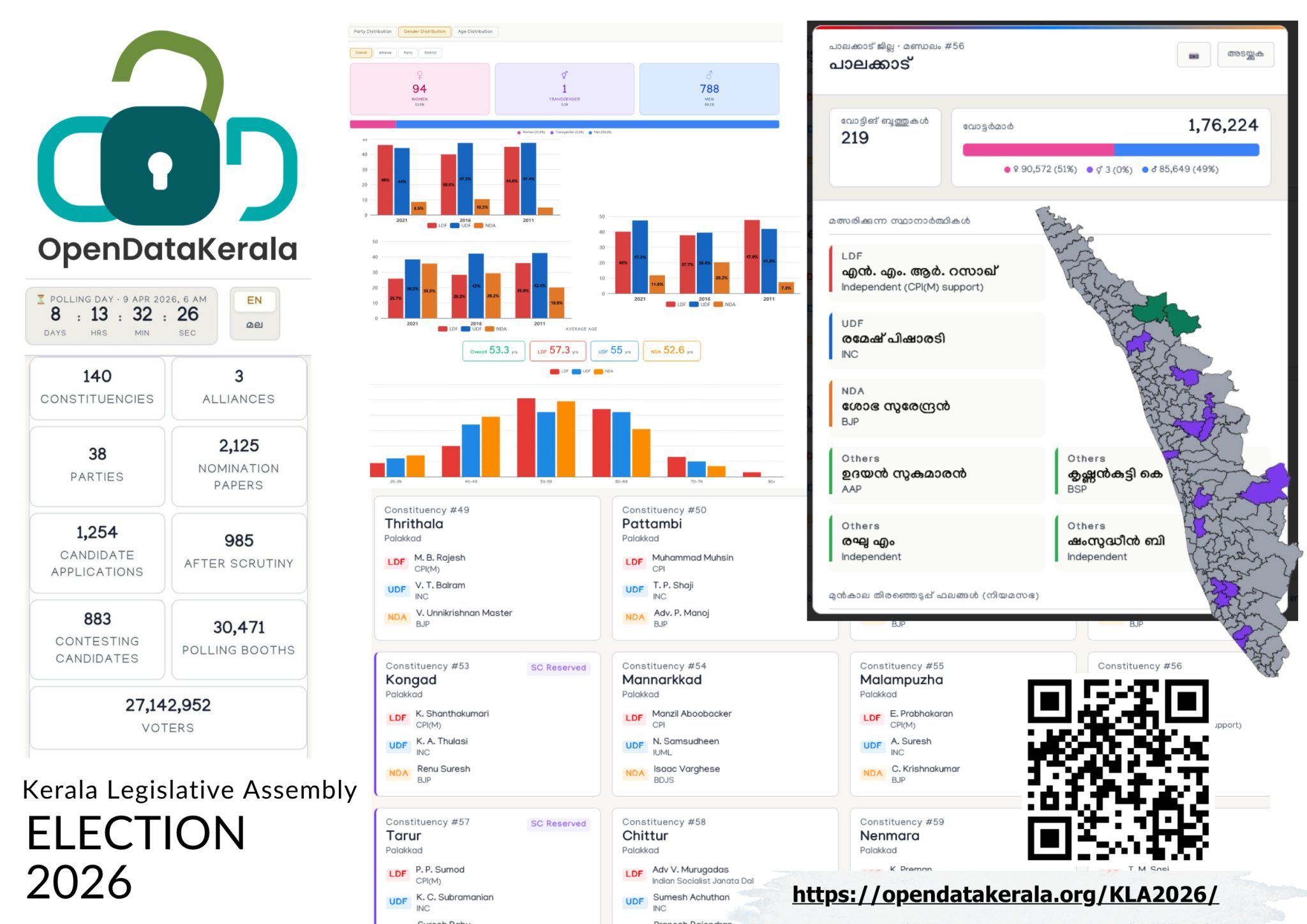
Various infogaphics available in KLA 2026 Election portal
What started as a frustrating, repetitive challenge is finally becoming a collaborative, open, and scalable system. Open data becomes powerful when technology enables it, collaboration strengthens it, and people take responsibility for it-driving democratisation of knowledge and social awareness. Still a long way to go-but this feels like a real milestone.